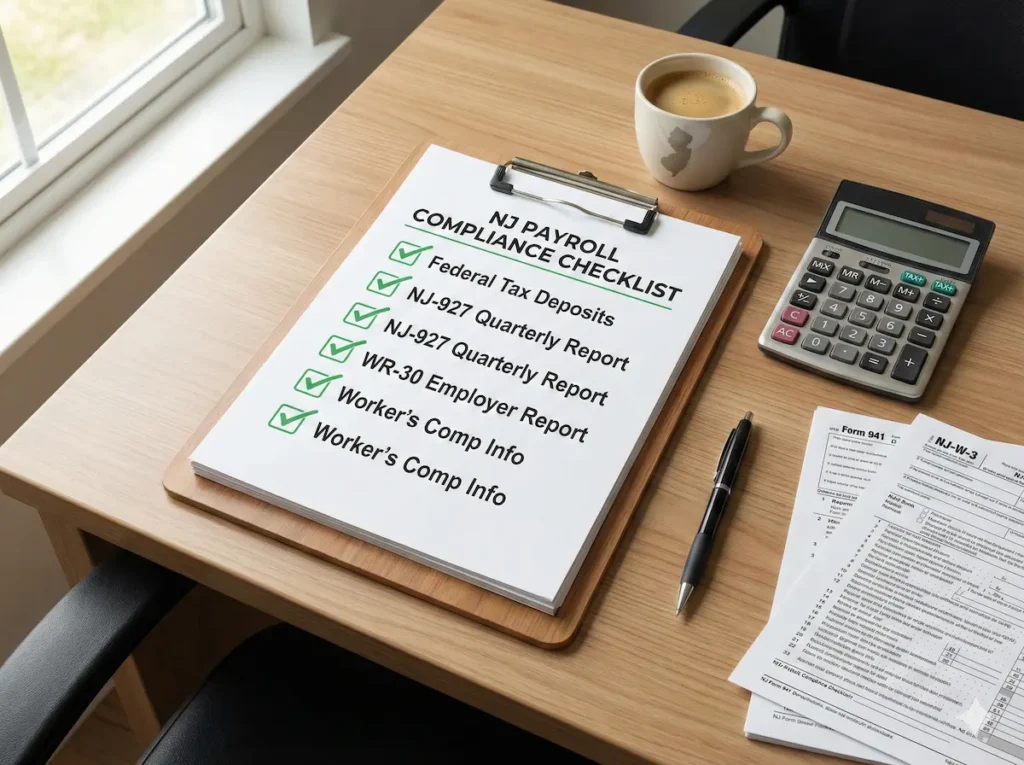
The Essential Payroll Compliance Checklist for NJ Small Businesses
Managing payroll in New Jersey is about more than just writing checks. The Garden State has some of the most complex labor laws and tax requirements in the country. For small business owners, missing a single form or deadline can lead to costly audits and steep penalties.
Whether you are hiring your first employee or managing a growing team, staying compliant is non-negotiable. As a Certified QuickBooks ProAdvisor, I have compiled this essential checklist to help you navigate NJ payroll regulations with confidence.
Classify Your Workers Correctly (W-2 vs. 1099)
The first step in compliance is determining who is actually an employee.
W-2 Employees: You control when, where, and how they work. You must withhold taxes.
1099 Contractors: They are independent, use their own tools, and set their own hours.
⚠️ Crucial Note: New Jersey has strict tests for this. Misclassifying an employee as a contractor to save on taxes is a major “red flag” for the NJ Department of Labor.
Gather the Required New Hire Paperwork
Before an employee starts their first day, ensure you have these federal and state forms on file:
Form I-9: To verify eligibility to work in the U.S.
Form W-4 (Federal): For federal income tax withholding.
Form NJ-W4: Specifically for New Jersey gross income tax withholding.
New Hire Reporting: You must report new employees to the NJ New Hire Directory within 20 days of their hire date.
Know Your NJ Specific Payroll Taxes
New Jersey requires specific withholdings that other states do not. Ensure your payroll software (like QuickBooks) is set up to calculate:
Don’t Forget Workers’ Compensation
In New Jersey, if you have employees, you must have Workers’ Compensation Insurance. This is not a tax, but a legal requirement. Operating without it is a criminal offense and can result in significant fines.
Stick to the Filing Deadlines
Missing a deadline is the easiest way to get fined. Mark these on your calendar:
Keep Detailed Records
New Jersey labor laws require you to keep payroll records for six years. This includes names, addresses, hours worked, and amounts paid. Using a digital system like QuickBooks Online makes this automatic and secure.
Need Help Navigating NJ Payroll?
Payroll compliance doesn’t have to be a headache. If you are worried about FLI rates, misclassification, or setting up your payroll software correctly, I can help.
Contact Charles Giglia Bookkeeping today. Let’s set up a system that keeps you compliant and gives you peace of mind.